
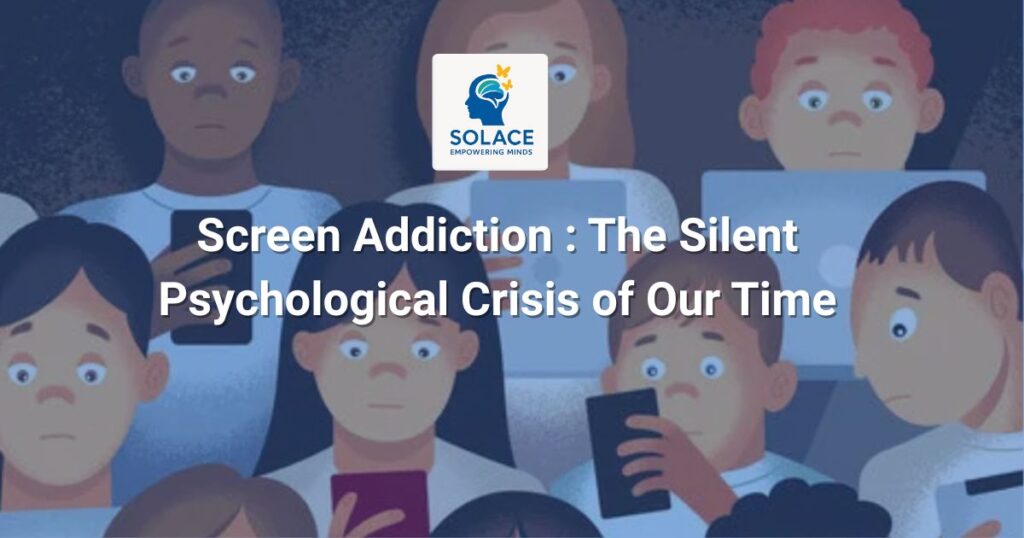
Screen Addiction: The Silent Psychological Crisis of Our Time
In today’s digital world, screens are everywhere—phones, tablets, laptops, televisions. They connect us, inform us, and entertain us. Yet, beneath their usefulness lies a growing psychological concern that often goes unnoticed: screen addiction.
Screen addiction is not just a “teen problem,” nor is it simply about excessive phone use. It is a behavioural and emotional issue that affects children, adolescents, and adults alike—impacting attention, emotions, relationships, sleep, and mental health.
What Is Screen Addiction?
Screen addiction refers to excessive, compulsive, and emotionally dependent use of digital devices, where an individual finds it difficult to regulate screen time despite negative consequences.
Psychologically, it resembles behavioural addictions because it involves:
Loss of control
Craving and dependency
Emotional discomfort when access is restricted
Interference with daily functioning
It is important to understand that screens themselves are not the enemy. The problem begins when screens become the primary tool for emotional regulation.
Why Are Screens So Addictive? (The Psychology Behind It)
Screens stimulate the brain’s dopamine reward system—the same system involved in motivation and pleasure. Likes, notifications, videos, and games provide instant gratification, which the brain quickly learns to seek again and again.
For teenagers especially, screens serve as:
An escape from stress and academic pressure
A distraction from boredom or loneliness
A substitute for emotional connection
A space for validation and identity exploration
Over time, the brain starts preferring fast digital rewards over slower, real-life experiences, reducing patience, focus, and emotional tolerance.
Common Signs of Screen Addiction
Some warning signs include:
Irritability or anger when screen use is limited
Difficulty concentrating on studies or work
Sleep disturbances and late-night scrolling
Loss of interest in offline activities
Emotional withdrawal from family
Constant urge to check the phone
Decline in academic or work performance
These signs often appear gradually and are frequently mislabelled as “laziness,” “attitude problems,” or “normal teenage behaviour.”
Impact on Mental Health
Excessive screen use has been linked to:
Anxiety and restlessness
Low frustration tolerance
Emotional numbness or mood swings
Reduced self-esteem due to comparison
Attention and memory difficulties
Increased stress and burnout
For adolescents, prolonged screen dependence can interfere with emotional development, social skills, and self-regulation, which are critical during this stage of life.
Why Simply Taking Screens Away Doesn’t Work
One of the most common mistakes parents and adults make is focusing only on restriction.
Sudden screen removal often leads to:
Anger and rebellion
Increased secrecy
Emotional outbursts
Breakdown of trust
This happens because screens are not just habits—they are coping tools. When screens are removed without addressing emotions, the individual feels unsupported and misunderstood.
Regulation must come before restriction.
Healthy Screen Management: A Psychological Approach
Effective screen de-addiction focuses on balance, boundaries, and emotional awareness, not punishment.
Key strategies include:
Understanding why the screen is needed emotionally
Building offline coping skills
Encouraging real-life connections
Creating screen-free routines (meals, bedtime)
Modeling healthy screen habits as adults
Strengthening communication rather than control
For teenagers, parental connection is more powerful than parental control.
Role of Counselling and Psychological Support
When screen use begins to affect emotions, academics, relationships, or self-esteem, professional guidance can help.
Psychological interventions—especially CBT-based approaches—help individuals:
Identify emotional triggers behind screen use
Develop self-regulation skills
Improve attention and focus
Replace compulsive habits with healthy routines
Strengthen emotional resilience
Screen de-addiction is not about removing technology—it is about teaching the mind how to use it consciously.
A Final Reflection
Screens are a part of modern life. The goal is not to eliminate them, but to ensure they do not replace real experiences, relationships, and emotional growth.
When we look beyond the screen and understand the psychology behind its use, we move from blame to balance, from control to connection.
Screen addiction is not a failure of discipline.
It is a signal for emotional support.
— Rinku Jain
TEDx Speaker | Psychologist | Founder – Solace: Empowering Minds